RESEARCH
PARKINSON’S DISEASE
UNRAVELLING THE CELLULAR MECHANISMS THAT CAUSE CELLS TO DIE IN PARKINSON’S DISEASE AND HOW THEY CAN BE MANIPULATED TO DEVELOP NEW THERAPEUTIC APPROACHES
Parkinson’s disease is the most prevalent neurodegenerative movement disorder affecting millions of people worldwide. Neuropathologically, Parkinson’s disease is characterized by widespread loss of certain vulnerable neuronal populations, especially dopaminergic substantia nigra neurons, and formation of intraneuronal eosinophilic inclusions which stain positive for α-synuclein and are termed Lewy pathology.
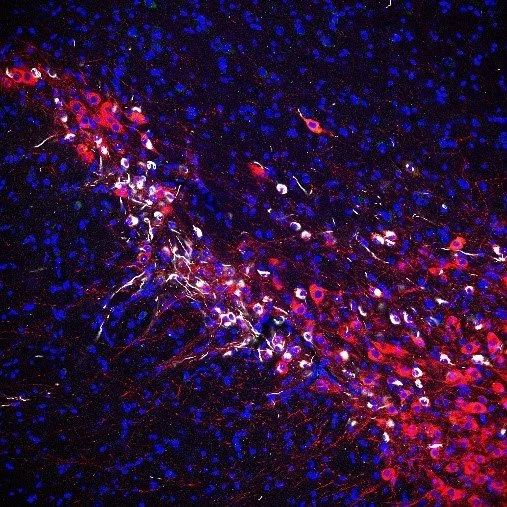
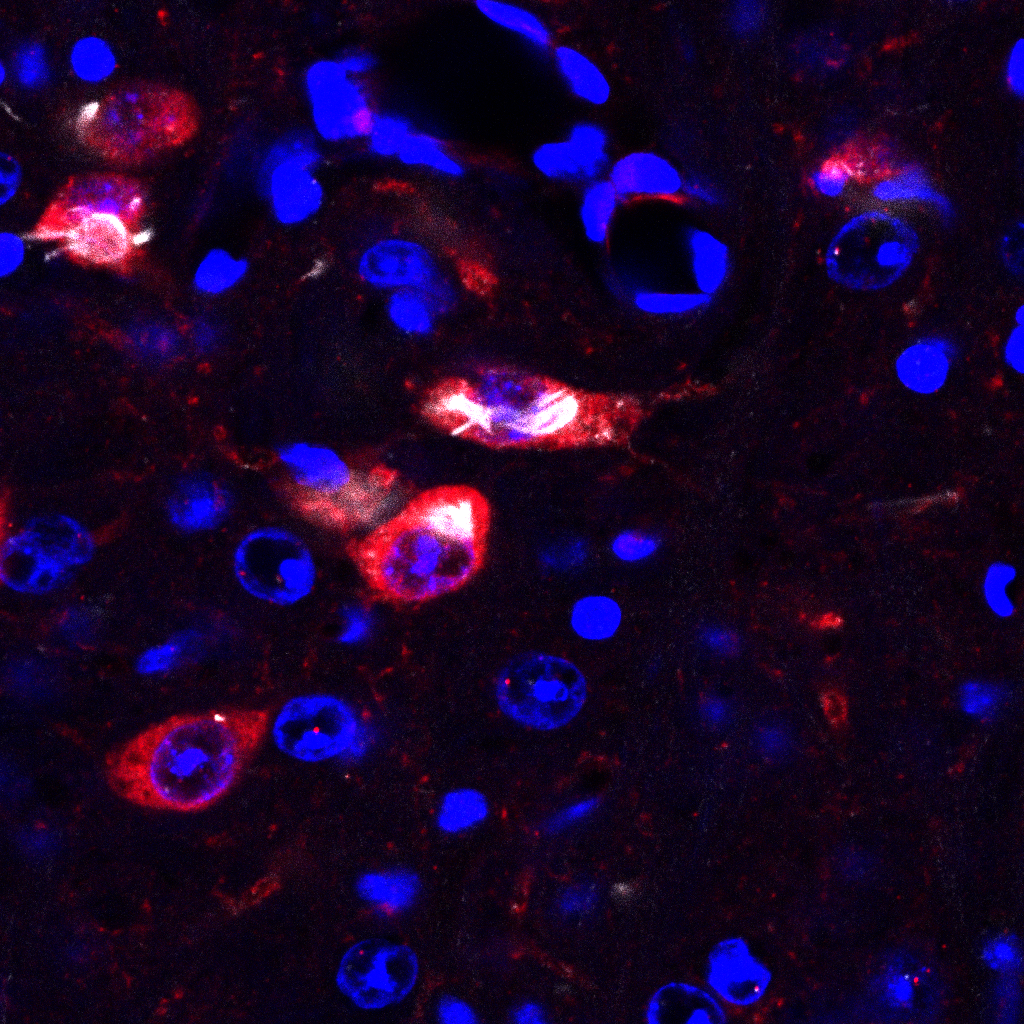
Manifesting α-synuclein pathology (white) in dopaminergic substantia nigra neurons (red).
VICIOUS INTERPLAY BETWEEN PRION-LIKE PROPAGATION OF ALPHA-SYNUCLEIN AND SELECTIVE CELLULAR VULNERABILITY
Are all neurons capable of manifesting Lewy pathology? Is the probability of trans-synaptic spreading between two brain structures directly related to the strength of the synaptic coupling between them?
By combining state of the art neuroanatomical tracing with whole-brain pathology mapping techniques scientists at the CNP lab investigate how Parkinson’s disease pathology progresses in the brain. So far, this work has highlighted the importance of cellular vulnerability factors which render certain neurons more vulnerable to the disease process.
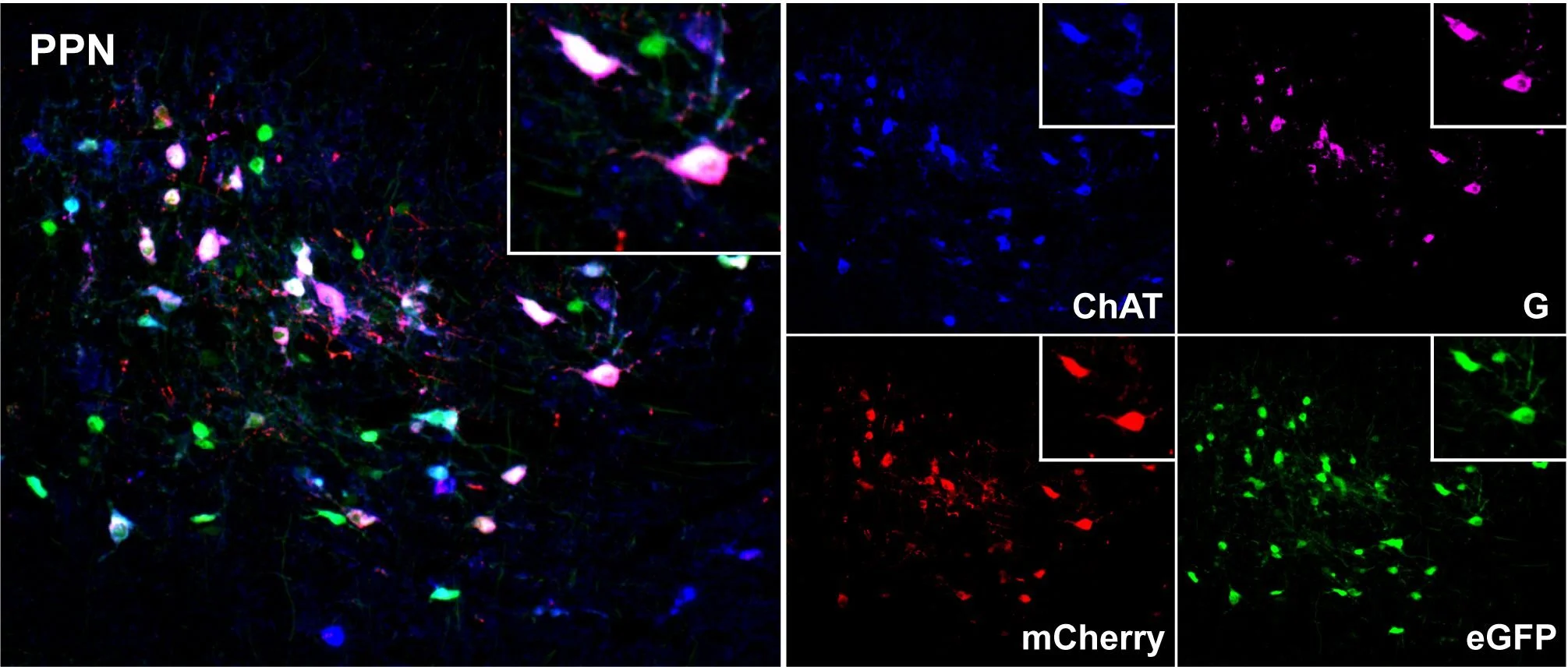
Initiating rabies virus tracing in the cholinergic population of the pedunculopontine nucleus.
UNREVEALING THE INTRACELLULAR DEATH CASCADE OF ALPHA-SYNUCLEIN AGGREGATION
Intracellular aggregation of the small protein α-synuclein is a hallmark of Parkinson’s disease and thought to be responsible for the progressive loss of neurons. By combining up-to-date biosensors with two-photon-laser-scanning-microscopy we investigate how Lewy pathology causes neurons to die in Parkinson’s disease.
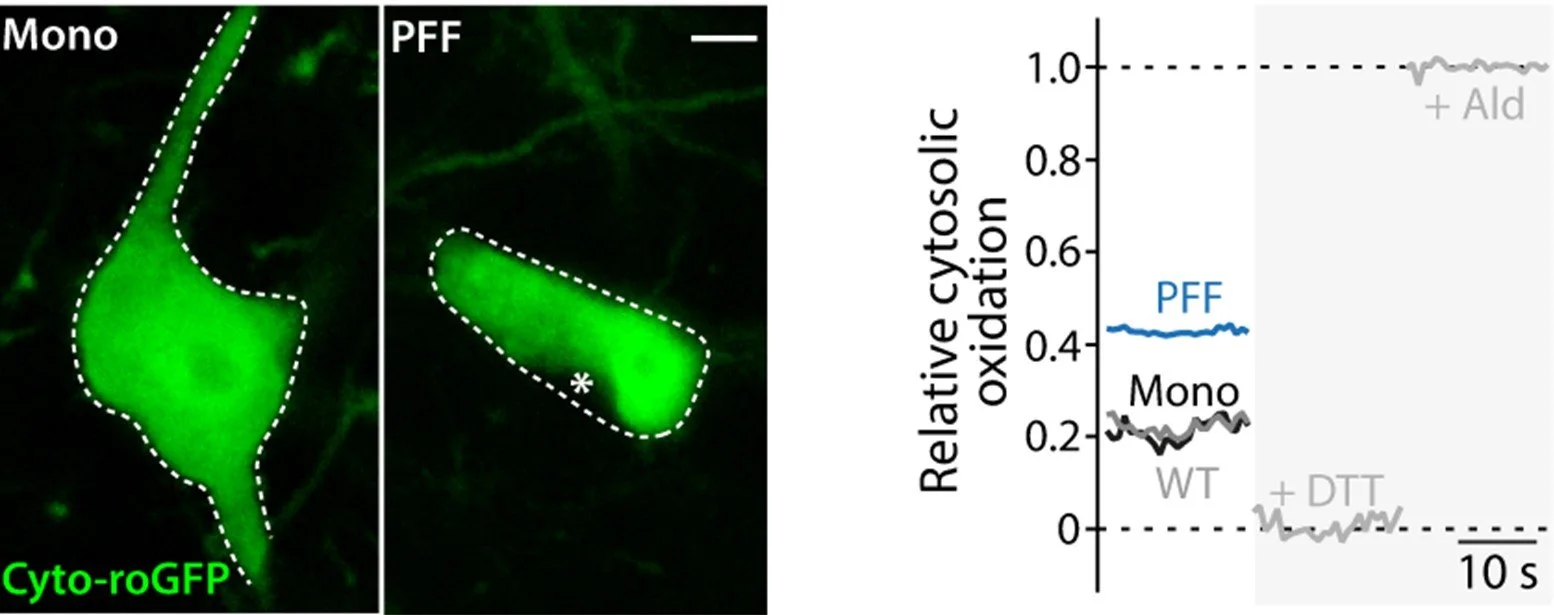
By combining redox-sensitive biosensors with two-photon-laser-scanning-microscopy the oxidative state of neurons can be measured.
DEVELOPMENT OF NEW PARKINSON’S DISEASE MODELS
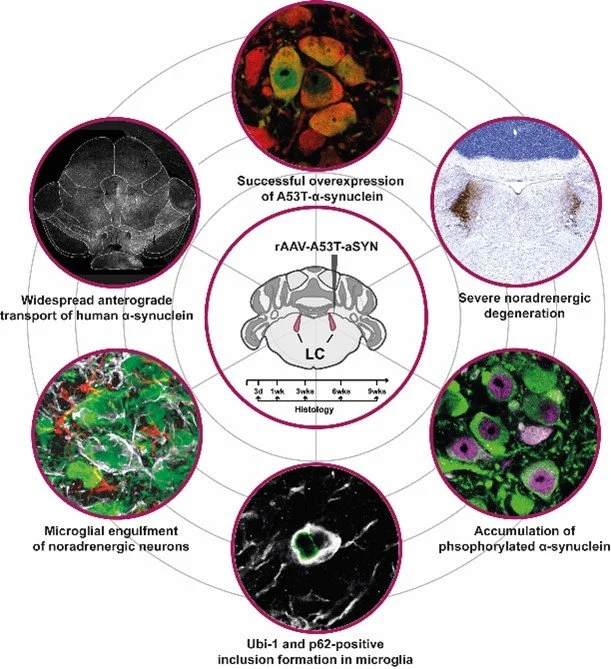
Robust disease models are at the core of high-quality translational Parkinson’s disease research. Scientists at the CNP lab are continuously making progress in further characterizing the two central α-synuclein based Parkinson’s disease models: The α-synuclein preformed fibril model and the viral vector based α-synuclein overexpression model.
ADDICTIVE DISORDERS
INVESTIGATING THE CELLULAR PATHOPHYSIOLOGY OF AMPHETAMINE ADDICTION
The CNP lab is now extending its research focus to addictive disorders. In a first project we are currently developing a new model of amphetamine addiction to investigate which brain networks become active during amphetamine use and withdrawal.
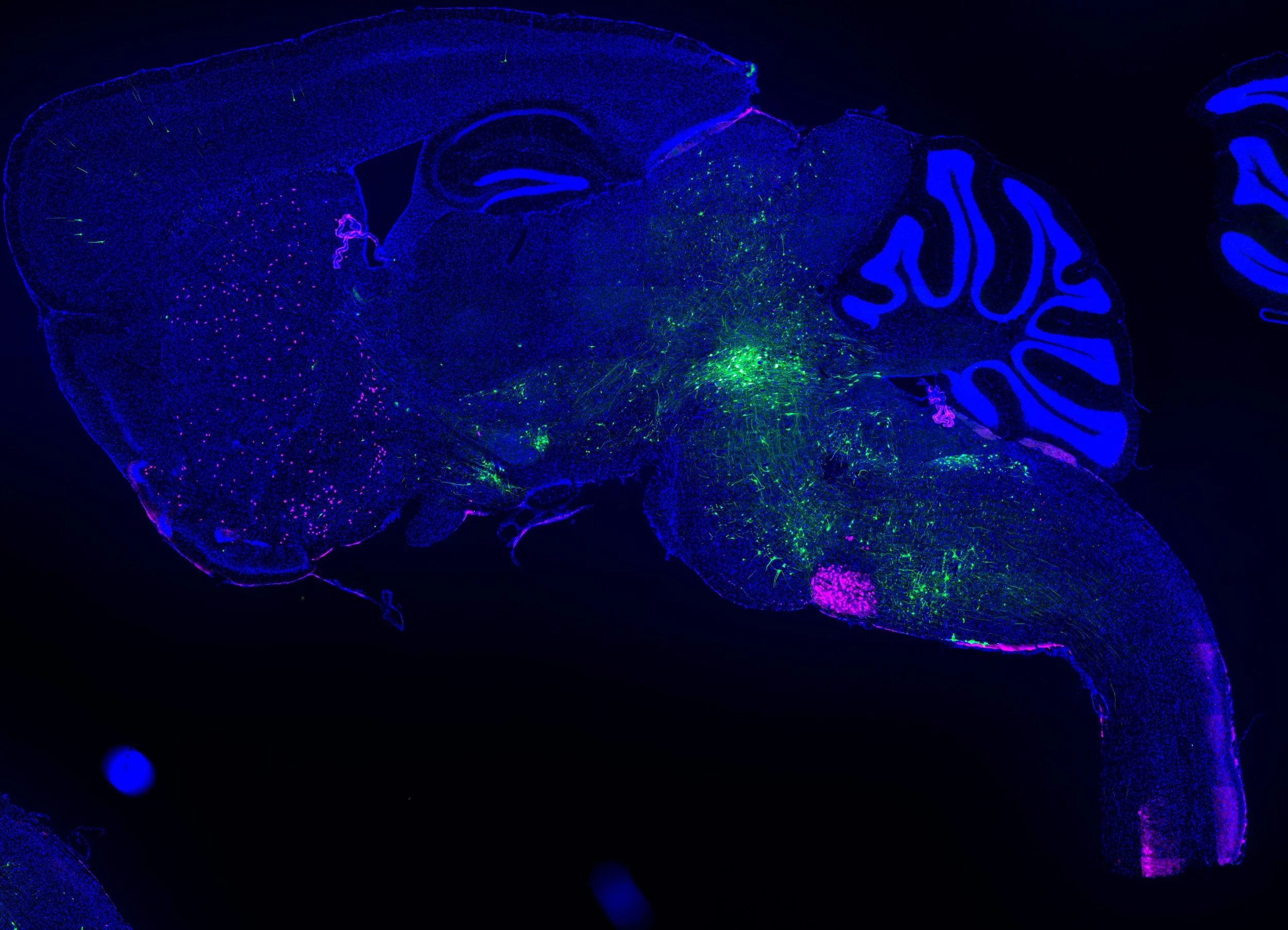
Using rabies virus tracing to map neuronal connections.